

DRIVETRAINS, DECODED · A BUYER’S FIELD GUIDE
AWD vs. 4WD.
Look past the badge.
The useful question is what the system can actually do. Here’s how to read the controls, understand the limits and choose for the driving you really do.
Inside this guide
01 / START HERE
Two badges. More than two kinds of system.
AWD and 4WD both describe ways to drive all four wheels. The badge alone won’t tell you whether the vehicle has an automatic mode, a locked transfer case or low-range gearing.
For a daily driver, the important distinction is often whether the selected mode is designed for dry pavement. For slow, difficult terrain, the questions shift toward gearing, ground clearance, tires and the vehicle’s specific equipment. A model name cannot answer all of those questions.
A full-time or automatic 4WD system may be suitable for ordinary paved-road use. A part-time system in a locked mode can have different restrictions. Jeep’s own system explanations distinguish these operating types.1 Treat “AWD versus 4WD” as the beginning of the conversation.
Comparing model years? Read our 2027 Jeep and RAM equipment guide for documented examples and exact-vehicle questions.
02 / UNDERSTAND THE HARDWARE
Follow the connection.
These four ideas explain more than a badge does. Tap through the diagram, then use the comparison below to check what a listing leaves unanswered.
The system manages the connection.
Many AWD systems automatically vary drive between the axles. Some prioritize one axle until conditions call for more assistance. The design and available driver controls vary by vehicle.
Ask: What does this exact system do without driver input, and which modes are approved for paved roads?
CONCEPTUAL ILLUSTRATION · Lines show operating concepts, not component locations, torque percentages or a particular vehicle’s architecture. Actual distribution and engagement vary.
| Concept | What it means | What to verify |
|---|---|---|
| Automatic AWD | The system can manage drive to the axles as conditions and its programming require. | Default operation, available modes and tire requirements. |
| Full-time / automatic 4WD | An equipped mode can accommodate the front-to-rear speed differences needed on pavement. | Which position is pavement-compatible; restrictions for other positions. |
| Locked high range | The transfer case couples the front and rear driveline for the conditions specified in the manual. | Surface restrictions. This does not itself mean the axle differentials are locked. |
| Low range | A lower transfer-case gear range supports controlled low-speed work where equipped. | The exact engagement procedure and permitted operating conditions. |
03 / READ THE ACTUAL VEHICLE
The controls tell a better story.
Two vehicles can wear a 4WD badge and offer different choices. These are manual-based label examples, not photographs of dealership stock or confirmation that every example has the same equipment.
2026 JEEP WRANGLER · EQUIPPED FIVE-POSITION EXAMPLE
The owner’s manual distinguishes the pavement-compatible 2H and 4H AUTO positions from the surface restrictions for 4H PART TIME and 4L. Other transfer-case configurations exist. Confirm which one is installed.2
2026 RAM 1500 · EQUIPPED FIVE-POSITION EXAMPLE
The manual’s equipped example separates AUTO from HIGH and LOW. Confirm the installed controls and instructions; trims and transfer cases differ. An AUTO position is a specific feature to verify, rather than something to assume from “4×4.”3
Neutral is part of the transfer-case instructions, not an extra traction setting. Don’t experiment with shift sequences on the strength of a general article. The correct procedure depends on the vehicle, the system and the requested shift.
Before asking “Which is better?” ask “Which system is this?”
04 / BUY FOR YOUR REAL WEEK
Start with the road you use.
Your routine is more useful than an imagined worst-case adventure. Choose a situation to see the questions worth taking to a vehicle visit.
YOUR DAILY ROUTE
Prioritize the mode you can actually leave selected.
For paved commuting and changing weather, ask whether the equipped system has a pavement-compatible automatic or full-time mode. Then compare tires, ride, visibility and operating costs. Four driven wheels alone don’t establish a better daily driver.
At the vehicle: “Show me the normal paved-road setting and the manual page that describes it.”
This is a shopping conversation guide, not permission to enter hazardous conditions. Road closures, water depth, traction and driver judgment can make a route unsuitable for any vehicle.
05 / THE LIMITS MATTER
Drive traction isn’t a stopping guarantee.
Getting moving and slowing down are different jobs. AWD or 4WD is not a promise of shorter braking distances, more cornering grip or safe travel on ice.
Check tire condition, suitable tire type and the vehicle’s cold-pressure specification. NHTSA’s tire and winter-driving guidance also emphasizes slowing down and leaving more space when conditions deteriorate.4
For a used vehicle, make the tires part of the inspection: size, wear, condition and compatibility with the manufacturer’s requirements. Don’t assume that a drivetrain feature compensates for neglected maintenance.
If towing is part of your plan, make it a separate exact-vehicle calculation. An AWD or 4WD badge does not establish a trailer rating, payload allowance or suitability for your loaded combination.
06 / SAVE THIS FOR THE LOT
Seven checks before you choose.
AWD & 4WD vehicle-shopping checklist
Take this to any vehicle visit. Leave unknowns open until someone can show you the evidence.
0 OF 7 CHECKED · Selections reset when you reload—print or copy to keep them
07 / THE QUESTIONS THAT COME UP
A few things worth clearing up.
Can I use 4WD on dry pavement?
It depends on the system and selected mode. Some full-time or automatic modes permit it. A locked part-time setting can be restricted to specified surfaces. Use the instructions for the installed system, rather than a general rule based on the badge.1
Does 4WD mean all four wheels are locked together?
No. A transfer-case connection between front and rear is different from locking the left and right sides of an axle. Ask about the transfer case and axle differentials separately.
Does AWD always have low range?
No. Do not infer low range from an AWD badge. Look for the exact equipment description and operating instructions. The same caution applies to assuming a particular 4WD vehicle has the configuration you want.
Is 4WD automatically better for towing?
No. Compare the exact vehicle’s ratings, equipment and loading. Drivetrain choice is one part of that assessment; it cannot substitute for checking payload and the loaded trailer combination.
What if an online listing just says “4×4”?
Ask for the VIN, equipment information and clear photographs of the controls. If the installed system remains uncertain, record that uncertainty before comparing it with another vehicle.
08 / PUT THE GUIDE TO WORK
One guide. A local next step.
The principles stay the same wherever you live. Choose your area for relevant Jeep and RAM shopping pages, then use the checklist to evaluate the actual vehicle.
SHOP WITH BONHAM CHRYSLER DODGE JEEP RAM
Start with our Bonham guides.
Our dealership is at 2122 N Center St, Bonham, TX 75418. These area links all lead to Bonham-hosted pages; they do not describe additional dealership locations.
Talk through the equipment · 903-583-8877 ↗Buy the capability you can identify—and the one your driving actually needs.
RESEARCH & TRANSPARENCY
How this guide was built.
This research-based guide was developed with AI assistance for research, drafting, diagrams and layout, for Bonham Chrysler. We did not conduct an instrumented vehicle test, inspect a specific dealership VIN or measure comparative traction. The diagrams illustrate operating concepts. Equipment and procedures must be checked against the exact vehicle.
Primary sources and equipment qualifications
- Jeep: 4×4 systems and 4×4 FAQ and glossary. System categories, full-time and part-time distinctions. Manufacturer terminology is not identical across all brands.
- 2026 Jeep Wrangler Owner’s Manual, U.S./Canada, “Four-Wheel Drive Operation,” printed pages 178–180. Equipped five-position example; not the only Wrangler transfer case.
- 2026 RAM 1500 Owner’s Manual, U.S./Canada, “Four-Wheel Drive Operation,” printed pages 200–203. Equipped five-position labels; configurations differ. Some procedure headings use different nomenclature, so follow the installed controls and applicable instructions.
- NHTSA: Tires and Winter Driving Tips. Tire care and driving precautions. These sources do not establish a universal AWD-versus-4WD performance ranking.
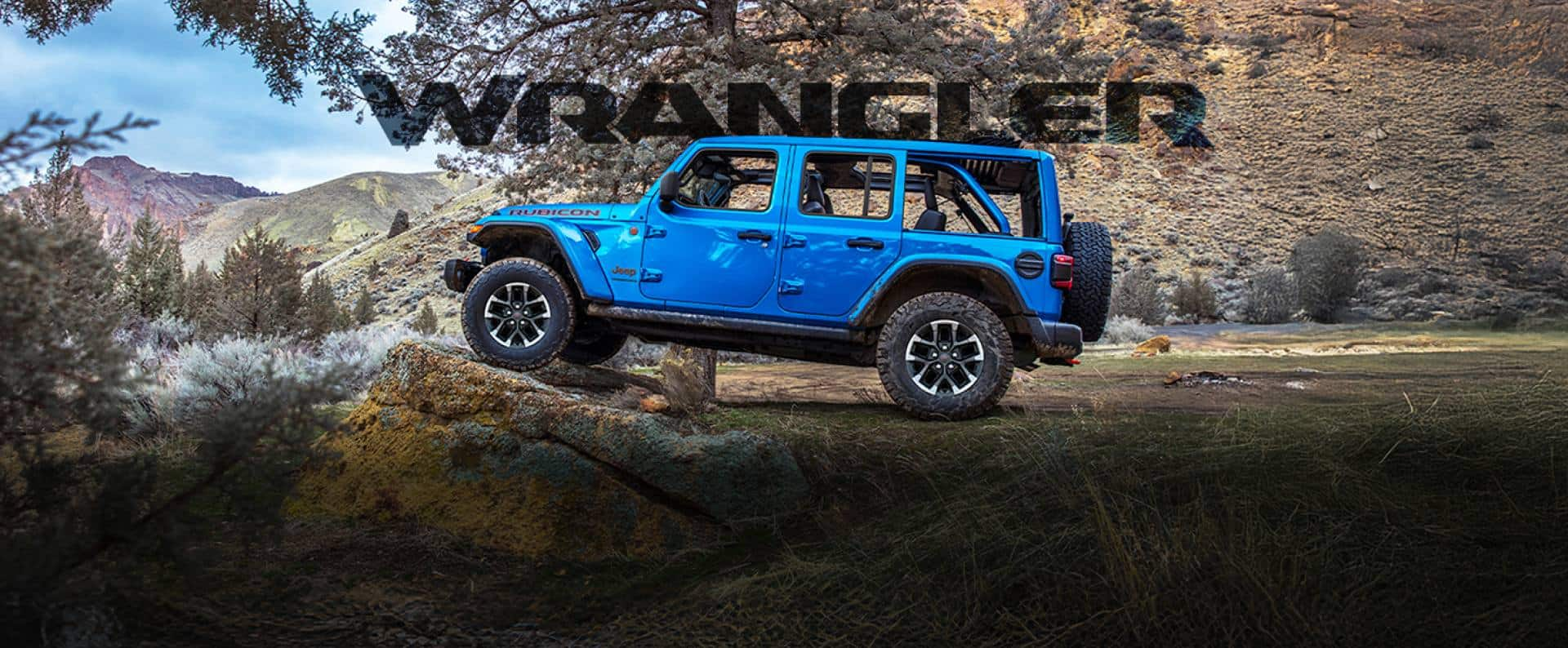
Source review: November 1, 2026. OEM hero photograph supplied on the Jeep 2026 Wrangler website. No manufacturer endorsement of this guide is claimed.